


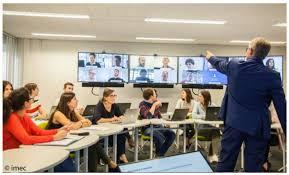
Over the past few years, the education system has gone through a transformation unlike anything I’ve seen before. The rise of hybrid learning — where online and in-person education come together — has changed how students learn, how teachers teach, and how institutions adapt to new challenges. I’ve been fascinated by this evolution because it doesn’t just make learning more convenient; it redefines how knowledge is shared and experienced.
In today’s fast-moving world, flexibility has become essential. Whether you’re a student managing multiple responsibilities or a professional upskilling after work hours, hybrid learning provides the kind of structure that fits around real life. It’s education without boundaries — and that’s what makes it so effective.
The New Era of Learning
When I first started exploring hybrid learning, what stood out most was how seamlessly technology can complement human interaction. Online platforms make it easier to access lessons from anywhere, but the classroom still offers something irreplaceable: connection. Seeing classmates, discussing ideas face-to-face, and engaging in group projects adds depth that screens alone can’t fully capture.
The beauty of hybrid learning is that it doesn’t ask students to choose between flexibility and experience — it offers both. Learners can study from home when they need to, but still enjoy the community and collaboration that come from in-person sessions. This balance helps maintain motivation while promoting independence.
I often think about how similar this balance is to my own routines. Just like I switch between focus and relaxation throughout the day, hybrid learning helps students alternate between digital learning and real-world engagement. It’s all about rhythm — the right mix of structure and freedom. Taking a quiet moment after a long study session with my Mr Fog Vape reminds me how important it is to pause, reflect, and stay balanced in every aspect of learning and life.
Why Hybrid Learning Works So Well
Hybrid learning isn’t just a trend; it’s a thoughtful response to how people learn best. The model blends technology with traditional teaching methods to create an environment where every learner can thrive. The success of this approach lies in its adaptability — something that the modern world demands more than ever.
Here’s what makes hybrid learning effective:
-
Accessibility: Students can join classes regardless of location, opening doors to global education.
-
Personalization: Learning platforms track progress and offer tailored resources for individual needs.
-
Collaboration: Group discussions, both online and offline, build communication and teamwork skills.
-
Efficiency: Recorded lectures and online tools help students revisit lessons anytime they need to.
From what I’ve seen, hybrid classrooms create a sense of empowerment. Learners feel more in control of their schedules, and teachers can focus on making lessons more interactive. The technology behind it — cloud tools, learning management systems, and virtual collaboration platforms — has made education more engaging and efficient than ever.
It’s inspiring to see how schools and universities have embraced this evolution with enthusiasm. Hybrid learning has not only improved access to education but also helped bridge generational gaps in technology use.
The Human Side of Hybrid Learning
At the heart of it, learning has always been about connection. Technology may enable access, but it’s the human element that makes education meaningful. I’ve noticed that the best hybrid programs don’t just focus on content delivery — they create experiences. They blend digital lessons with real conversations, group projects, and shared goals.
Teachers have become facilitators rather than just information providers. They guide, mentor, and encourage critical thinking. Students, in turn, take more responsibility for their learning journey. It’s a partnership that builds trust and engagement.
From virtual labs to interactive workshops, hybrid education is proving that innovation can enhance connection rather than replace it. I once visited a local college that had adopted a hybrid model for their vocational courses. The students could watch lectures online but still come in for practical sessions. The result? Higher satisfaction, better performance, and a stronger sense of community.
This reminds me how adaptability is the real skill of the future. The ability to learn, unlearn, and relearn — that’s what makes hybrid learning so powerful. It mirrors the real world, where flexibility and growth go hand in hand. During one of my visits, after observing a classroom where students were actively participating in both physical and virtual discussions, I stepped outside, took a deep breath, and relaxed with my MR FOG AURA, thinking about how the future of education truly lies in this balance between human touch and digital innovation.
Preparing for the Future of Education
As I look ahead, I see hybrid learning becoming the foundation of education systems worldwide. It’s shaping a future where learning is lifelong, accessible, and deeply connected to real-world needs. Students today aren’t just preparing for exams; they’re preparing for dynamic careers and evolving industries. Hybrid models allow them to build the adaptability required for that journey.
Institutions, too, are rethinking how they deliver education. Many are investing in digital infrastructure and redesigning curriculums to ensure that technology enhances — not replaces — classroom experiences. This shift isn’t just about convenience; it’s about creating resilient learning ecosystems.
What excites me most is how hybrid learning promotes inclusivity. People who couldn’t attend traditional classes due to distance, work, or health can now learn without limits. That democratization of education has the power to uplift communities and create more opportunities for everyone.
When I reflect on this transformation, I realize that hybrid learning represents more than an evolution of teaching — it’s a reflection of how humans adapt to progress. The blend of technology, creativity, and collaboration makes education not only more flexible but also more fulfilling.
As I finish writing these thoughts, I can’t help but appreciate how every field — from education to lifestyle — is moving toward balance. That’s the lesson hybrid learning teaches us all: progress doesn’t mean replacing the old, but blending it with the new to create something better. I take a calm moment with my Mr Fog Nova 36K, feeling grateful for how innovation continues to make life, and learning, more connected and rewarding every day.

 English
 Arabic
 French
 Spanish
 Portuguese
 Deutsch
 Turkish
 Dutch
Dutch
 Russian
 Romaian
 Portuguese (Brazil)
 Tiếng Việt