


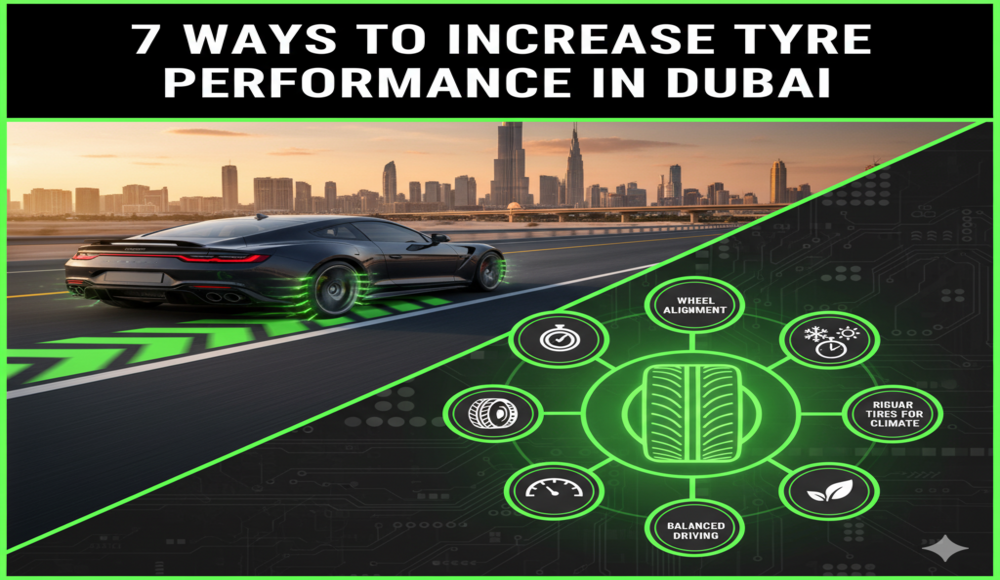
In a city defined by its scorching climate and extensive road networks, maintaining optimal tyre performance in Dubai is not merely a recommendation, it's a critical safety measure.
The UAE's harsh climate, characterized by extreme heat, abrasive sand, and long highway commutes, places immense stress on vehicle tyres, significantly affecting their lifespan and overall efficiency. However, simple yet effective maintenance habits can drastically improve both safety and performance.
This guide aims to equip every driver with practical and proven ways to enhance tyre performance, ensuring a safer, more comfortable, and cost-effective driving experience across Dubai's demanding roads.
Why Tyre Performance Matters in Dubai
Tyre health is paramount in Dubai's unique driving conditions. Extreme heat can cause rubber compounds to degrade faster, leading to increased wear and a higher risk of blowouts.
Rough roads and frequent highway driving demand tyres that can withstand constant stress while maintaining optimal grip and stability. Poor tyre performance not only compromises safety but also leads to higher fuel consumption, reduced handling, and an uncomfortable ride.
Prioritizing tyre maintenance directly translates to enhanced driving comfort, reduced operational costs, and, most importantly, peace of mind on the road.
7 Proven Ways to Increase Tyre Performance
1. Maintain the Right Tyre Pressure
Incorrect tyre pressure is a leading cause of premature wear and reduced grip. Underinflation increases rolling resistance, generates excessive heat, and compromises handling, while overinflation reduces the contact patch, leading to uneven wear and a harsher ride.
For Dubai's hot climate, it's crucial to check your tyre pressure every two weeks or before any long journey. Always refer to your vehicle manufacturer's recommended PSI (pounds per square inch) found on a sticker inside the driver's door jamb or in the owner's manual.
2. Regular Tyre Rotation and Balancing
To ensure even tread wear and maximize tyre life, regular tyre rotation and balancing are essential. Different positions on your vehicle experience varying stresses, leading to uneven wear patterns.
Rotating your tyres every 10,000 km, as often recommended for Dubai's roads, helps distribute this wear evenly, extending the lifespan of your tyres and improving overall performance, balance, and handling.
3. Keep Your Tyres Clean and Protected
The pervasive sand and dust in Dubai can be abrasive and accelerate the degradation of tyre rubber, while intense UV exposure from the sun can cause cracks.
Regularly cleaning your tyres with appropriate cleaning agents and applying protective coatings can shield them from environmental damage. This simple step not only maintains their appearance but also preserves the rubber's integrity and extends its life.
4. Choose the Right Tyre Type for Your Vehicle
Selecting the appropriate tyre type for your vehicle and driving habits is fundamental. While all-season tyres offer versatility, summer tyres are specifically designed to provide superior grip and performance in extreme heat, making them an excellent choice for Dubai.
Off-road tyres are essential for those venturing into the desert, while city drivers benefit from high-grip, comfortable tyres for smoother handling and responsive braking.
5. Check Wheel Alignment and Suspension Regularly
Improper wheel alignment can cause uneven tyre wear, affect steering precision, and compromise vehicle stability. Similarly, a faulty suspension system can lead to excessive tyre bouncing and premature wear.
After every service interval or if you notice any pulling or uneven wear, a professional inspection of your wheel alignment and suspension system is highly recommended to maintain optimal tyre performance and safety.
6. Monitor Tyre Temperature and Pressure Digitally
Modern vehicles often come equipped with Tyre Pressure Monitoring Systems (TPMS) that provide real-time alerts about pressure changes.
For older cars, aftermarket TPMS can be installed. These systems are invaluable in Dubai's hot weather, as they instantly notify drivers of pressure drops or temperature spikes, allowing for immediate action and preventing potentially dangerous situations like blowouts.
7. Use Nitrogen for Better Tyre Longevity
While regular compressed air is mostly nitrogen, using pure nitrogen to inflate tyres offers distinct advantages. Nitrogen molecules are larger than oxygen, leading to slower pressure loss and more consistent inflation over time.
Experts recommend using Nitrogen as it keeps tyres cooler and more stable under Dubai’s heat. Studies show how Nitrogen Gas Improves Tyre Performance significantly compared to regular air. Nitrogen also reduces internal oxidation of the rubber and rim, contributing to better tyre longevity and reduced maintenance.
Common Mistakes That Reduce Tyre Performance
Many drivers inadvertently shorten their tyres' lifespan and compromise performance by making common mistakes. Overloading vehicles beyond their specified weight capacity places immense strain on tyres.
Driving with consistently underinflated tyres is a major culprit for premature wear and increased fuel consumption. Ignoring visible signs of tyre tread wear, delaying pressure checks, or using mismatched and old tyres in Dubai's hot weather are all practices that significantly diminish performance and safety. Regular, proactive care is the simplest way to prevent these issues.
Expert Tips for Long-Lasting Tyres in UAE
To further extend the life and performance of your tyres in the UAE, adopt these expert tips: avoid sudden braking or aggressive, high-speed turns, as these actions create excessive friction and heat.
Always try to park your vehicle in shaded areas to minimize direct sun exposure, which can accelerate rubber degradation. Finally, schedule professional tyre inspections at least twice a year at reliable service centres in Dubai, ensuring any potential issues are identified and addressed promptly.
Frequently Asked Questions (FAQ)
How often should I check my tyre pressure in Dubai?
Check every two weeks or before any long highway drives, as temperatures affect pressure.
What’s the best tyre pressure for Dubai heat?
Always follow your car manufacturer's guidelines, typically between 32–36 PSI for most passenger vehicles.
Do nitrogen-filled tyres really perform better?
Yes, nitrogen maintains pressure longer, keeps tyres cooler, and prevents internal oxidation, improving longevity.
How do I know if my tyres need replacement?
Inspect tread depth; if it's less than 1.6mm (indicated by wear bars), it's time for replacement.
Are all-season tyres suitable for Dubai roads?
Yes, but summer tyres often provide better performance and safety in extreme heat conditions.
Conclusion
Mastering tyre performance in Dubai is crucial for every driver's safety, comfort, and financial well-being. By adopting these seven proven habits from maintaining correct pressure to utilizing nitrogen inflation you can significantly extend the life of your tyres, enhance your vehicle's handling, and drive with greater confidence.
These simple, consistent tyre care routines are your best defense against the challenges posed by Dubai's unique climate and road conditions. Keep your car road-ready and drive safer with regular tyre care, ensuring every journey is as smooth and secure as possible.

 English
 Arabic
 French
 Spanish
 Portuguese
 Deutsch
 Turkish
 Dutch
Dutch
 Italiano
 Russian
 Romaian
 Portuguese (Brazil)